![AAON knowledge base logo 2023.png]](https://www.aaon.com/hs-fs/hubfs/AAON%20knowledge%20base%20logo%202023.png?height=40&name=AAON%20knowledge%20base%20logo%202023.png)
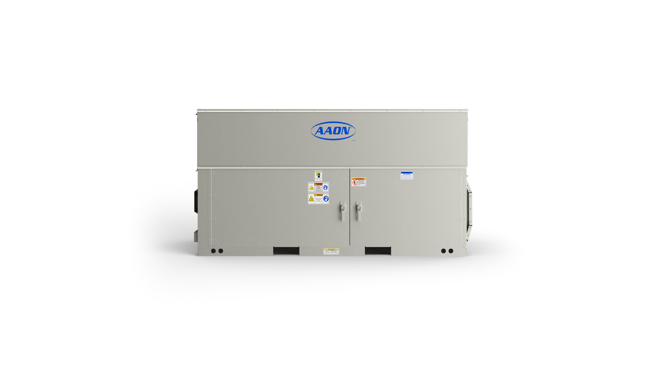
RQ Series Water-Source Heat Pumps
HVAC equipment replacement.
Something most building owners don't look forward to, but what if replacement meant updating an aging system with a more efficient heat pump? The question then becomes - when is the right time to replace equipment? And when replacing a traditional HVAC system with a heat pump design makes the most sense.
What Is Heat Pump Replacement?
A heat pump replacement is the process of replacing an older HVAC system currently on a building, whether that is a traditional AC system or just an older heat pump, with a newer efficient heat pump. This replacement can lead to a modern, and more efficient system over the life of the unit.
How Heat Pumps Work: The Basic Mechanism
Let’s start with the basics. What is a heat pump?
A heat pump is a type of HVAC system that transfers heat to provide heating and cooling based on what the space demands at the time. Heat pumps are designed so the condenser and evaporator can reverse roles, allowing heat to be transferred in either direction to provide either heating or cooling to the space.
Types of Heat Pumps Relevant to Commercial Buildings
Air-Source Heat Pumps – one of the most common types of heat pumps. These can come in a packaged rooftop or split system configuration. In an air-source heat pump, air is the medium used to absorb or reject heat.
To learn more about Air-Source Heat Pumps, Click Here
Geothermal/Water-Source Heat Pumps – utilize water or a glycol water mixture as the medium to absorb or reject heat. Water-source heat pumps usually use a cooling tower and boiler to condition the water loop, while a geothermal or ground source heat pump system, use ground bores instead.
To learn more about Water-Source Heat Pumps, Click Here
Signs It's Time for Heat Pump Replacement
Commercial Heat Pumps typically offer a 10-15 year lifespan, but it’s not uncommon for some to have 15-20 year lifespans.
When your heat pump is due for a replacement, there will be signs.
Sign 1: System Age and Declining Performance
The system's age plays a major role in heat pump lifespan. Over time, the heat pump system can lose efficiency as the compressor ages and other components experience normal wear and tear. This is especially common in commercial systems, which often operate under continuous high-load conditions.
Sign 2: Escalating Repair Frequency and Costs
One of the first signs a system may need replacement is frequent repair calls. As the system ages the cost of the repair can become more expensive.
Residential systems often look to the 5,000 rule when looking at replacement. This is where you multiply the system’s age by the cost of the repair; if it exceeds $5,000, replacement is often recommended.
In commercial systems, these systems have a much higher cost and have more expenses involved in replacement; which can include down-times that could affect the building and its operation. A common guideline among building managers is the 50% rule. If a repair is expected to cost more than half the price of a new system, replacing the unit often makes better sense financially. However, when having multiple aging systems, it makes more sense to do a phased replacement program, where the systems begin to be replaced over an extended period of time, to help spread out the cost and lower system downtime.
Sign 3: Rising Energy Bills Despite Consistent Usage
Because commercial heat pump technology has evolved over recent years, newer equipment often offer higher efficiency values. Replacing a unit older than 10 years could result in better cost savings over time due to these higher efficiency ratings.
Sign 4: Comfort and Humidity Control Issues
Uneven temperatures, hot/cold zones, and poor humidity control can all be signals the system can no longer match building load. For commercial properties (offices, retail, healthcare), comfort problems can directly affect occupant productivity and overall comfort. This can be a driving factor for upgrading to a newer system.
Sign 5: Unusual Noises, Odors, or Refrigerant Leaks
Screeching, rattling, grinding = mechanical wear. Musty odors = potential mold. Refrigerant leaks on older units using R-22 (phased out) or R-410A (being phased down) are expensive and signal broader system deterioration. Upgrading to a newer system could result in reduced maintenance costs, smoother operation, and better code compliance with newer refrigerant.
Repair or Replace Your Heat Pump: How to Make the Decision
Age and repair cost are two important factors to consider when making the decision to replace a heat pump.
The 5,000 Rule and the 50% Rule Explained
Many in the industry look to the 5,000 rule for residential systems and the 50% rule for commercial systems. The 5,000 rule is when the system’s age is multiplied by the cost of repairs and if the total exceeds $5,000, replacement is recommended; of course, it is important to factor rising equipment prices before making the final decision.
Commercial systems often use the 50% rule, where if the repairs are more than 50% of the total unit cost, replacement makes more financial sense.
When Repair is Better Than Replacement
Repairs can be the more cost-effective option if the system is newer, especially if that newer system is still covered by warranty, offsetting the repair costs. If the repair issues are minor, or under the repair cost thresholds established, repair is the best route.
When Replacement is Better Than Repair
Replacement makes the better long-term investment if the system is old, has repeated failures, rising energy bills for operation, utilizes an obsolete refrigerant, or performs poorly for occupant comfort.
The Commercial Facilities Angle: Planned vs. Reactive Replacement
Reactive replacement (emergency swap after failure) is always more expensive than planned replacement. Planned replacement offers the ability to schedule replacements during off seasons, can be coordinated with capital budget cycles, and potentially use a phased multi-unit rollout so it’s not all done at once.
Implementing a routine maintenance schedule allows potential problems to be detected before a major equipment failure occurs. This proactive approach helps identify the warning signs of an aging system and provides the opportunity to plan and budget for replacement before performance is significantly impacted.
Heat Pump Replacement Cost: What Drives the Price
The cost of the heat pump depends on what kind of system you are looking at. A simple air-source heat pump with basic features will cost less than a complicated geothermal heat pump.
Equipment and Efficiency Rating
Equipment that offers higher efficiency ratings will often have a higher upfront cost, but this can be offset by the overall lower operating costs it will offer year after year.
System Size and Capacity
The bigger the system size and capacity your commercial application requires, the more the system will cost. Incorrectly sizing your equipment can also lead to higher operating costs. For example oversized units have to continuously run, which leads to higher energy consumption and a shorter unit lifespan.
Installation Complexity
The complexity of the application will impact the cost. A geothermal system requiring multiple bore-holes or a complicated system layout will cost more than a straight-forward packaged air-source heat pump. Ductwork, electrical capacity, and the cost of installing units on a rooftop that require a crane, all play a factor in cost. Commercial installations require coordination between contractors, electrical, and building management. Always refer to a qualified service technician for equipment installation.
Matched System vs. Unit-Only Replacement
For a commercial split system, there is both an outdoor unit and an indoor unit connected by piping. Replacing only the outdoor unit while keeping aging indoor components (air handler, coil) can be a risky shortcut. A system that is mismatched could lead to poor performance, so in many cases, owners will replace both pieces of equipment.
Regional Labor and Permitting
Labor rates, local code requirements, and seasonal demand affect total installed cost. Scheduling replacements during spring or fall (off-peak) could offer better contractor availability and potentially better pricing.
Total Cost of Ownership (TCO) — The Commercial Frame
The total cost of ownership should be considered when looking to replace or repair a system. When considering replacement, the initial equipment and installation costs should be assessed alongside the anticipated life cycle benefits, such as lower energy consumption, fewer repair requirements, and improved system reliability.
Choosing the Right Replacement Heat Pump: Efficiency Ratings and System Types
Understanding Efficiency Ratings
Heat pumps come with listed efficiency ratings that display how efficient their heating and cooling performance is. It’s important to understand what these values mean when comparing different equipment. These ratings have a standard calculation used by all manufacturers, that are specified by organizations such as ASHRAE and DOE (Department of Energy), to ensure that efficiency ratings can be compared.
Heating Efficiency Ratings
HSPF2 – Heating Seasonal Performance Factor. HSPF2 measures the heating efficiency throughout an entire heating season. HSPF2 measures a heat pump's heating efficiency by comparing its total heating output to the total electricity consumed over the heating season. The higher the HSPF2 the more efficient the unit is in converting electricity to heating. This is an important value to look at when comparing different models and brands of equipment, especially heat pumps.
COP – Coefficient of Performance. COP is used to measure the energy efficiency of a system in heating mode at specific part load heating conditions. It is an efficiency metric that compares the heating capacity output to the electrical input needed to produce the heat necessary to achieve the leaving air temperature and capacity to a space. If a unit were to use fully electric heat, its COP would be 1 because it would be 100% efficient.
COP is a key measure of heat pump performance because heat pumps are highly efficient and typically achieve COP values in the range of 2.5 to 4.5, meaning it is 200% to 400% more efficient than a unit using only electric heat to produce the heat. In heating mode, a higher COP means the system delivers more heat for each unit of energy it consumes.
Cooling Efficiency Ratings
SEER2 - Seasonal Energy Efficiency Ratio. SEER2 calculates the total cooling output (Btu) of an AC system or heat pump over a cooling season. SEER2 is a measurement for units less than 65,000 Btu/h capacity and will be seen on smaller commercial units typically five tons or less.
SEER2 is calculated by dividing the number of Btu (British Thermal Units) removed by the Total Energy (watt/hr.) consumed during a cooling season. This ratio considers part-load conditions of the unit and utilizes EER2 in its calculation. A higher SEER2 value means a unit can provide a greater amount of cooling for each unit of electricity consumed.
IEER2 – Integrated Energy Efficiency Ratio. IEER2 is used for large commercial units with a full load cooling capacity greater than 65,000 Btu/h. It represents the integrated, or average, energy efficiency of a commercial HVAC system at various operating loads over an entire year.
Unlike SEER2, which focuses on a single set of conditions for multiple “bin” temperatures throughout the year, IEER2 considers the system’s performance across multiple temperature conditions for a more optimal average that occurs during real-world operation. IEER2 is calculated using EER2 values at four specified ASHRAE conditions: first at full load cooling, then at three different part load conditions. IEER2 utilizes a formula that takes into account the percentage of how often a unit would run at those part load conditions.
To learn more about efficiency ratings, click here.
Air-Source vs. Water-Source vs. Geothermal
Choosing the right heat pump depends on your application. For an application seeking sustainability, a geothermal heat pump may be the optimal choice, if their space allows. For an application that has an existing water loop through the building with cooling towers or boilers, a water-source heat pump may be the most logical selection. For an application that wants the efficiency a heat pump offers but looking for a more straightforward option, an air-source heat pump is a good option; particularly if the rooftop space is available, or an existing packaged rooftop needs to be replaced.
Cold Climate Performance Considerations
In the past, particularly for air-source heat pumps, cold climate performance was a concern. Traditional air-source heat pumps, up to this point, struggled to operate in colder climates and were not a feasible option.
Now with the increase in technology available, air-source heat pumps are pushing the operating envelope. Air-source heat pump features are now available to help your system operate in even the coldest conditions.
Dual-Fuel / Hybrid Systems
In low ambient applications, relying only on fully electric heat pumps that utilize electric supplemental heat could result in higher electricity usage. This not only could increase the overall energy costs but could also require the building to have a higher load capacity needed to operate it. In newer buildings, this means having electrical installed with high FLA, MCA, and MOP capacities, increasing costs. In older buildings, this means an expensive overhaul to its electrical design to handle that high demand.
This is where dual-fuel systems can offer a balanced approach. In a dual-fuel system, a supplemental gas heater is provided to step in during extreme low-ambient conditions, while utilizing less fossil fuels, while providing comfort in all conditions. When a heat pump alone cannot provide the heat necessary for a space, a gas heat exchanger can be used to slowly supplement the heat needed to achieve the desired leaving air temperature.
Single-Stage vs. Two-Stage vs. Variable-Speed Compressors
Single-stage refers to on/off compressors, which operate by turning on and off at full capacity. On/off compressors provide high full-load efficiencies, but they fall short in precise temperature and humidity control. The advantages of on/off compressors is the simple controls and lower up-front cost, however, there is an increased energy cost when operating at part-load conditions. On/Off compressors are primarily now used as lag circuit compressors for equipment with two or more systems.
Two-stage scroll compressors offer a combination of simplicity and efficiency. They utilize the staged capacity control approach, like on/off scroll compressors, while delivering part-load efficiencies. These compressors run at 100% capacity or 67% capacity for part load applications. This reduces cycling the compressor completely off, reduces where on the compressor.
The unique feature of two-stage compressors is their ability to switch between part-load and full-load capacity. To reduce indoor humidity, two-stage compressors are capable at running the system for longer periods of time at part-load capacity. The advantages of these compressors are the high part-load efficiencies they offer, while still having simple controls.
Variable speed scroll compressors stand out with the highest part-load efficiencies among all compressor technologies. These compressors provide precise control over both temperature and humidity.
These compressors achieve capacity modulation through speed control. A Variable Frequency Drive (VFD) alters the frequency, which correlates to a change in speed. To ensure safe and efficient operation, variable speed compressors require specific controls that enforce the compressor's operating limits.
Why Proper Equipment Sizing Matters
Proper sizing for all HVAC equipment is important.
Oversizing can cause short cycling, where the equipment turns off and on too quickly, leading to higher energy costs and difficulty controlling humidity.
Undersizing equipment can cause units to run longer or continuously, accelerating wear and tear and resulting in a shorter unit lifespan.
Heat Pump Replacement Incentives, Rebates, and Financing
Heat pump replacement can be costly, but there are some state and utility rebate programs available to offset the cost of new equipment. It is worth checking into your local area for rebate programs when considering replacing your heat pump, because incentive requirements may vary by location.
What to Expect During Heat Pump Replacement: The Installation Process
Step 1: Professional Assessment and Load Analysis
A qualified HVAC professional rep assesses the existing system, building load, ductwork condition, electrical capacity, and all code requirements. For commercial: this may include a formal engineering review.
Step 2: System Selection and Specification
Select the right system type, capacity (tonnage), efficiency rating, and configuration the application requires.
Step 3: Removal of the Old System
This includes safe and proper refrigerant recovery and disposal as defined by the EPA requirements, in addition to removing the old equipment from the building with heavy machinery.
Step 4: Installation of New Equipment
This includes the outdoor unit, indoor components, refrigerant line connections, and electrical, controls integration. For large commercial RTUs, this may require crane access and coordination with building management.
Step 5: System Testing, Commissioning, and Handoff
Full system startup and verification including refrigerant charge checks, airflow testing, controls calibration, and performance verification.
Post-Replacement: Maximizing the Life of Your New Heat Pump
Maintenance keeps the new system performing at its optimal operation, and ensures the longevity of the equipment. All HVAC equipment should come equipped with an Installation Operation and Maintenance (IOM) manual. This will contain unit specific information on how to service and troubleshoot.
Monthly Tasks
Monthly maintenance tasks should include inspecting the supply fans, evaporator coils, and air filters.
Semi-Annual Professional Maintenance
A qualified service technician should perform an annual equipment inspection. This helps detect potential failure points or issues before they impact the entire system.
Read More About Common Maintenance Mistakes and How to Avoid Them
AAON Warranty Coverage: What's Protected
AAON offers industry leading warranties: 12-month limited warranty from installation or 18 months from factory shipment (whichever comes first); compressors covered 5 years standard (optional extension to 10 years); gas heat exchangers 15–25 years depending on material. Frame as a long-term investment protection advantage.
Why Commercial and Industrial Facilities Choose AAON for Heat Pump Replacement
AAON Heat Pump Product Lines for Replacement Projects
AAON offers Air-Source Heat Pumps, Water-Source Heat Pumps, and Geothermal Heat Pumps, in a wide range of capabilities.
AAON Alpha Class Air-Source Heat Pumps
AAON Alpha Class offers long-term savings in energy costs. Designed with serviceability in mind, AAON is redefining excellence with options like variable speed technology, all-electric or dual fuel, 100% outside air capability, and energy recovery. AAON Alpha Class offers three performance tiers to meet every need and climate: ECO SERIES, PRO SERIES, and EXTREME SERIES. Alpha Class EXTREME SERIES is designed to operate in cold-climate applications that require maximum heating capacity, efficiency, and reliability. It is available with 100% heating capacity at 5°F and operates reliably down to -20°F.
AAON Alpha Class offers simultaneous Dual Fuel in two modes of operation:
When conditions are not suitable for ASHP operation, AAON’s simultaneous Dual Fuel ASHPs can provide emergency heat to meet the full building load. When conditions are acceptable for ASHP operation, the gas heat is used to supplement the ASHP operation during defrost and lower ambient conditions – providing uninterrupted heat to the building.
AAON Water-Source Heat Pumps
For over 15 years, AAON has manufactured Water-Source Heat Pump (WSHP) Rooftop Units, Vertical Self-Contained Units, and Modular Air Handling Units with capacities ranging from 2-70 tons. AAON offers mass customizations on all of these configurations. These products may be used as Makeup Air ventilation units, Variable Air Volume (VAV) units, or Single Zone VAV units with variable capacity cooling capabilities and variable speed supply fans.
AAON Geothermal Heat Pumps
AAON geothermal heat pumps provide the ultimate renewable energy benefits, placing you at the forefront of climate-friendly energy solutions.
AAON offers impressive and impactful solutions that are significantly more efficient than traditional heating and cooling systems.
The AAON Difference: Factory-Tested, Field-Proven
Every AAON unit goes through functionality testing before leaving the factory, ensuring the controls and modes of operation are working correctly. This brings trust to the customer, giving them a peace of mind that their unit will function as defined.
Frequently Asked Questions About Heat Pump Replacement
How do I know when my heat pump needs to be replaced?
Consider replacing when the system is 10–15+ years old, requires frequent repairs (more than once per year), shows rising energy bills without increased usage, struggles to maintain consistent temperatures, or is utilizing obsolete refrigerant.
How much does heat pump replacement cost?
Commercial systems vary widely based on tonnage, system type, and building infrastructure. Multiple quotes from qualified contractors or HVAC manufacturers' authorized reps provide the most accurate estimate for your specific application.
Should I replace just the heat pump or the whole system?
If you have a split system configured as a heat pump, replacing both indoor and outdoor components simultaneously is recommended. Mismatched systems, like pairing a new outdoor unit with an aging air handler, sacrifices efficiency, may void warranties, and often results in early component failure. The reliability and efficiency from installing a fully matched system often outweigh the upfront cost.
What is the 5,000 rule for heat pump replacement?
The 5,000 rule is a quick decision framework: multiply your system's age (in years) by the estimated repair cost (in dollars). If the result exceeds $5,000, replacement is recommended. This framework is most commonly used in residential applications.
What efficiency ratings should I look for in a replacement heat pump?
Look for SEER2 or IEER2 (cooling efficiency) and HSPF2 and COP (heating efficiency) ratings. Higher ratings mean lower operating costs — particularly impactful for commercial facilities running systems year-round at scale.
Is it worth replacing a 15-year-old heat pump?
Yes, in most cases. A 15-year-old heat pump is at, or past, its typical service life. Modern high-efficiency systems can reduce energy consumption compared to a decade-old unit. When factoring avoided repair costs, utility savings, and available rebates, replacement typically delivers a positive return in the long term.
How long do commercial heat pumps last?
Commercial heat pumps typically last 15–20 years with proper maintenance — longer than many residential units due to higher build quality and more rigorous servicing schedules. However, efficiency declines significantly in the latter years. Proactive replacement at 12–15 years often delivers better total cost of ownership than waiting for failure.
What is the best heat pump type for a commercial building?
It depends on the building's size, climate, existing infrastructure, and decarbonization goals. Air-source heat pumps work well for most commercial retrofits. Water-source and geothermal configurations offer higher efficiency where the infrastructure supports them. Packaged rooftop units with heat pump capability are ideal for low-rise commercial buildings with existing rooftop equipment.