![AAON knowledge base logo 2023.png]](https://www.aaon.com/hs-fs/hubfs/AAON%20knowledge%20base%20logo%202023.png?height=40&name=AAON%20knowledge%20base%20logo%202023.png)
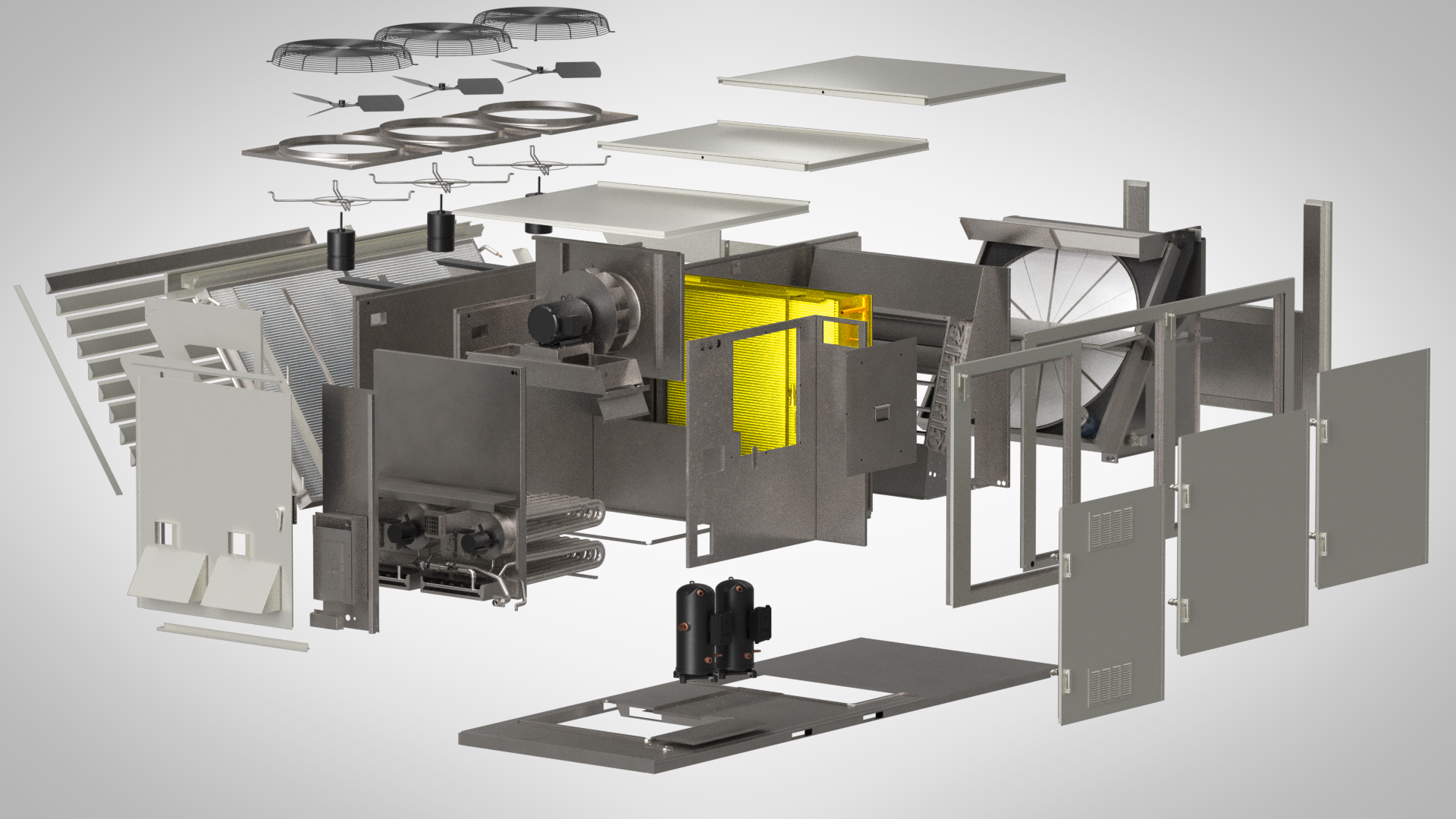
Evaporator coils play a critical role in HVAC system performance, comfort, and efficiency.
As a key part of the refrigeration cycle, the evaporator coil is responsible for transferring heat from the air to the refrigerant while also dehumidifying the air before it is delivered to the occupied space. Proper design, maintenance, and care of this component directly impact system reliability, energy efficiency, and indoor air quality.
Understanding the Evaporator Coil
What Does an Evaporator Coil Do?
The evaporator coil is an important component of the refrigeration system and could also be referred to as the indoor coil or cooling coil.
As warm air is blown across the evaporator coil, the cold refrigerant inside the coil absorbs heat from the air and causes the refrigerant to evaporate into a gas. This process cools and dehumidifies the air before it is delivered into the space as conditioned air.
Where is it Located in an HVAC System?
In commercial HVAC systems like a packaged rooftop unit, the evaporator coil is located inside the unit with the rest of the components. The coil can be found downstream of the air filters. In a blow-through configuration, the coil is installed in front of the fan, whereas in a draw-through configuration, it is installed behind the fan.
In typical residential units or split system units, the evaporator coil will be located inside the space within the indoor air handler, while the condensing unit is located outside.
Evaporator Coil vs. Condenser Coil – What’s the Difference?
While the evaporator coil absorbs heat indoors, the condenser coil serves the opposite function. The condenser coil is another important component of the refrigeration system and is commonly referred to as the outdoor coil.
At the condenser coil, heat absorbed by the refrigerant is rejected to the outdoor air. Because the outdoor air temperature is lower than the refrigerant temperature, heat transfers from the refrigerant to the outdoor air, causing the refrigerant to cool and condense back into a liquid state.
Together, the evaporator and condenser coils are what make up the continuous refrigeration cycle.
Common Evaporator Coil Issues
Frozen Evaporator Coil Symptoms and Causes
Dirty evaporator coils can restrict the airflow, which may cause the coil temperature to drop below freezing and cause the evaporator to freeze. Other causes can be low refrigerant levels or a malfunctioning blower fan. When the evaporator becomes frozen, it can result in a loss in cooling capacity or completely shutting the unit down.
Equipment features such as a Freeze Stat Startup can help protect against coil freezing. Freeze stats operate by being mounted on the first cooling circuit tubing and wired to de-energize all cooling circuits if the temperature falls below a setpoint where freezing becomes a possibility. These setpoints are adjustable to match system requirements.
Evaporator Coil Leaks – How to Detect and Fix
With the introduction of A2L refrigerants, commercial HVAC units are now required to be equipped with refrigerant detection systems. These systems identify leaks within the conditioned airstream and inside the unit cabinet.
For non-A2L systems that do not have refrigerant detection systems, common leak detection methods include:
-
Using an electronic leak detector
-
Listening for hissing or bubbling sounds
-
Injecting fluorescent dye into the refrigerant and utilizing a UV light to identify leaks
-
Performing nitrogen pressure testing
A certified service technician will determine whether a small leak can be repaired through brazing or if complete coil replacement is necessary.
When to Replace vs. Repair the Coil
Repairs may only restore performance temporarily. When the cost of repeated repairs begins to outweigh the cost of replacement, or when system performance and efficiency are significantly compromised, coil replacement becomes the more sensible option.
Always consult the unit’s Installation, Operation, and Maintenance (IOM) manual for detailed instructions and safety procedures before attempting coil repairs or replacements.
Maintenance and Cleaning
How to Clean an Evaporator Coil
Before cleaning an evaporator coil, power to the unit must be turned off.
Typical cleaning procedures include:
-
Brushing away debris or vacuuming with a brush attachment
-
Applying an approved coil cleaner
-
Carefully rinsing the coil and clearing any clogs
Improper cleaning techniques or chemicals can damage coils and reduce their lifespan.
Always follow the cleaning procedures outlined in the unit’s IOM manual.
Best Coil Cleaners for Commercial HVAC Systems
The best coil cleaner will depend on the type of coil and protective coatings it may have. For example, e-coated coils require special care. Harsh chemicals such as household bleach or acid cleaners should be avoided, as they are difficult to clean out from the coils and may accelerate corrosion that damages the e-coating.
Common coil cleaners recommended in many equipment IOMs could include:
-
Enviro-Coil Cleaner
-
GulfClean™ Coil Cleaner
Always consult the equipment’s IOM for approved products and cleaning instructions.
How Often Should You Clean the Coil?
Regular coil cleaning is essential for maintaining the equipment and its operation. A quarterly cleaning schedule is often recommended.
Selecting the Right Evaporator Coil
Types of Evaporator Coils
Most evaporator coils are constructed with copper tubes and aluminum fins. Coil configurations vary, and include:
-
Slab coils (flat rectangular)
-
A-coils (A-frame shape)
-
N-coils or other variations of A-coils
Coils may be cased or uncased and are available in different row configurations, such as 6-row high-capacity designs. Optional features may include polymer e-coating or stainless-steel coil casings, depending on the manufacturer and application.
Energy Efficiency Considerations
High-capacity evaporator coils (such as 6-row configurations) can significantly improve system energy efficiency and dehumidification performance. When selecting a coil, consider how coil design impacts airflow, heat transfer, and overall system efficiency.
Frequently Asked Questions About Evaporator Coils
What is the function of an evaporator coil in an HVAC system?
An evaporator coil absorbs heat from the air inside a building and transfers it to the refrigerant, cooling the air before it is circulated back into the space.
What causes an evaporator coil to freeze?
Common causes include restricted airflow, low refrigerant levels, dirty coils, or a malfunctioning blower fan.
How can I tell if my evaporator coil is frozen?
Symptoms include reduced airflow, ice buildup on the indoor unit, warm air from vents, or water leaks near the system.
Can you clean an evaporator coil yourself?
Commercial systems should be serviced by certified HVAC technicians to avoid damage.
How often should evaporator coils be cleaned?
At least once or twice per year for commercial systems, or more frequently in harsh environments.
What’s the difference between an evaporator coil and a condenser coil?
The evaporator coil absorbs heat indoors, while the condenser coil releases that heat outdoors.
Can an evaporator coil be repaired, or does it need to be replaced?
Small leaks may be repaired, but replacement is often more reliable for older or severely damaged coils.
Where is the evaporator coil located in a commercial HVAC system?
In a package rooftop unit, the coil will be found downstream of air filters and will either be before or after the fan, depending on the configuration.
Need assistance?
Your local AAON rep is ready to help.
👉 Find a Rep